Let’s answer the question almost no tour operator wants to answer in public: what does a Sahara desert tour cost, really? Most websites hide their prices behind a “contact us” button, leaving you to guess whether a desert trip means €80 or €800. We think that’s backwards — you can’t plan a trip around a mystery number.
Quick answer: from M’Hamid El Ghizlane, a Sahara desert tour costs from around €45 per person for a one-day excursion, from €80–100 for a two-day trek with an overnight camp stay, and roughly €60–90 per person per day for longer multi-day treks — with meals, guides, and camp accommodation included. Luxury camps and private tours run significantly higher, and the same itineraries booked through international platforms or Marrakech agencies often cost 30–100% more.
Below is the full breakdown: real starting prices by trip length, exactly what’s included, what pushes prices up or down, and why booking directly with a local camp is consistently the cheapest way to do this trip properly.
Table of Contents
- Sahara Desert Tour Cost by Trip Length
- What’s Actually Included in the Price
- What’s Usually NOT Included
- Why Prices Vary So Much Between Operators
- The Middleman Effect: Why Booking Direct Costs Less
- Budget, Standard, and Private: The Three Price Tiers
- Tipping: What’s Normal in the Desert
- Is a Longer Trek Worth the Extra Cost?
- Frequently Asked Questions
Sahara Desert Tour Cost by Trip Length
These are realistic starting prices per person for tours departing from M’Hamid El Ghizlane, based on standard (non-luxury) camps with meals and guiding included. Prices assume two or more people traveling together — solo travelers usually pay a supplement.
| Trip | Starting Price (per person) | What It Covers |
|---|---|---|
| 1-day tour to Erg Zahar | from €45 | 4×4 or camel excursion, lunch, guide |
| Overnight desert camp stay | from €50 | Camp night, dinner, breakfast, sunset/sunrise on the dunes |
| 2-day Draa Valley trek | from €90 | Camel/walking trek, 1 camp night, all meals, guide |
| 3-day trek to Erg Zahar | from €160 | 2 camp nights, all meals, camels, guide |
| 4-day trek (Erg Zahar + Draa Valley) | from €230 | 3 camp nights, all meals, camels, guide |
| 5-day full trek | from €290 | 4 camp nights, all meals, camels, guide |
For orientation across the wider region: independent guides put an all-inclusive 3-day/2-night Erg Chigaga trip at roughly €200–400 per person depending on comfort level, with multi-day camel expeditions in the €450–600 range for four to five days — so the M’Hamid-direct prices above sit at the accessible end of the real market, not a too-good-to-be-true corner of it.
What’s Actually Included in the Price
A properly quoted desert tour price from a local camp should include all of the following — if any of these appear as “extras,” you’re looking at an incomplete quote, not a cheaper tour:
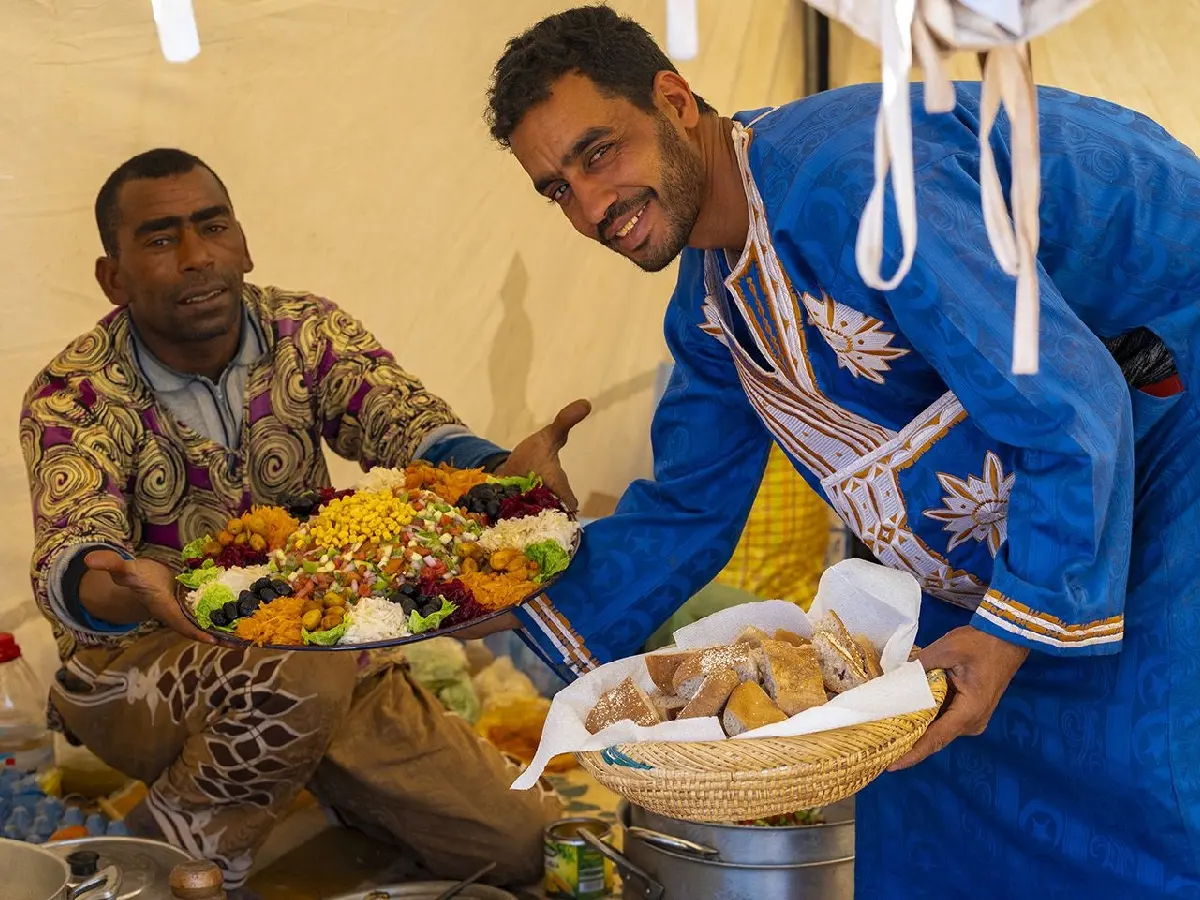
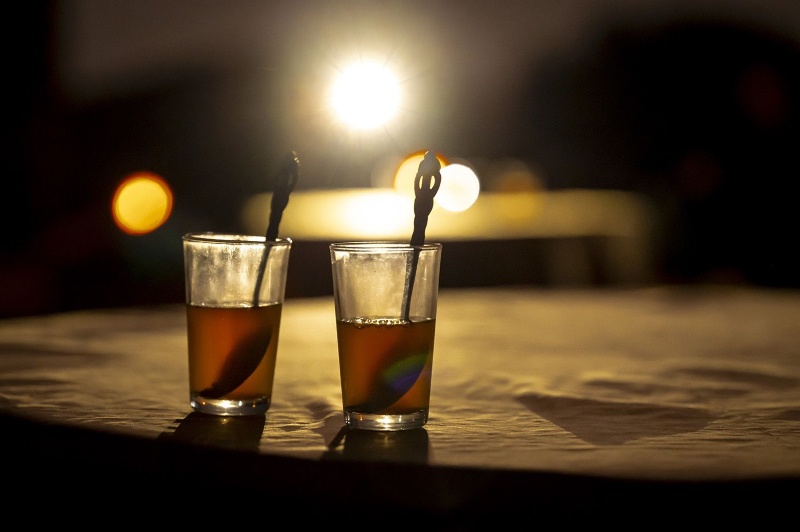
- All meals during the trek — typically a tagine or couscous dinner, breakfast, and lunch on full trek days, plus mint tea throughout.
- Accommodation at the desert camp — tent, mattress, and blankets (bring your own thermal layers in winter; our packing list covers exactly what).
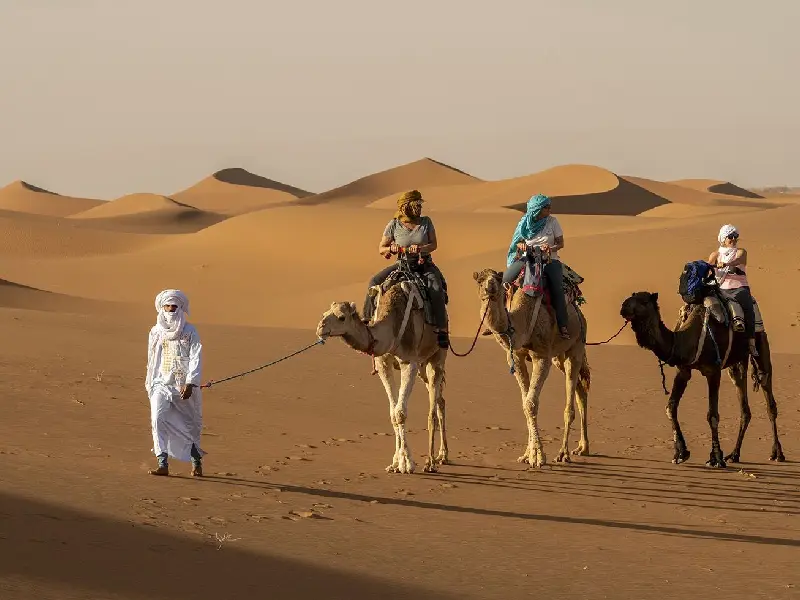
- Your guide and camel handlers — usually local nomad families with generations of experience in this exact landscape.
- Camels or 4×4 transport for the trek itself, depending on the itinerary.
What’s Usually NOT Included
- Transport from Marrakech or Fez to M’Hamid — this is the biggest variable. A CTM/Supratours bus to Zagora costs very little; a private Marrakech transfer costs considerably more. Our guide on how to reach M’Hamid El Ghizlane breaks down every option and price level.
- Soft drinks and bottled water beyond what’s provided — policies vary by camp, so ask.
- Tips for guides and camp staff (more on what’s normal below).
- Travel insurance — always your own responsibility, and genuinely worth having for a desert trip.
Why Prices Vary So Much Between Operators
Search for a “Sahara tour” and you’ll see prices from €30 to €1,000+ for what sounds like the same trip. Four factors explain almost all of that spread:
- Departure point. Tours “from Marrakech” bundle in two full days of driving and roadside hotel stops — you’re paying for transport and a rushed schedule, not more desert. Tours from M’Hamid start where the desert starts.
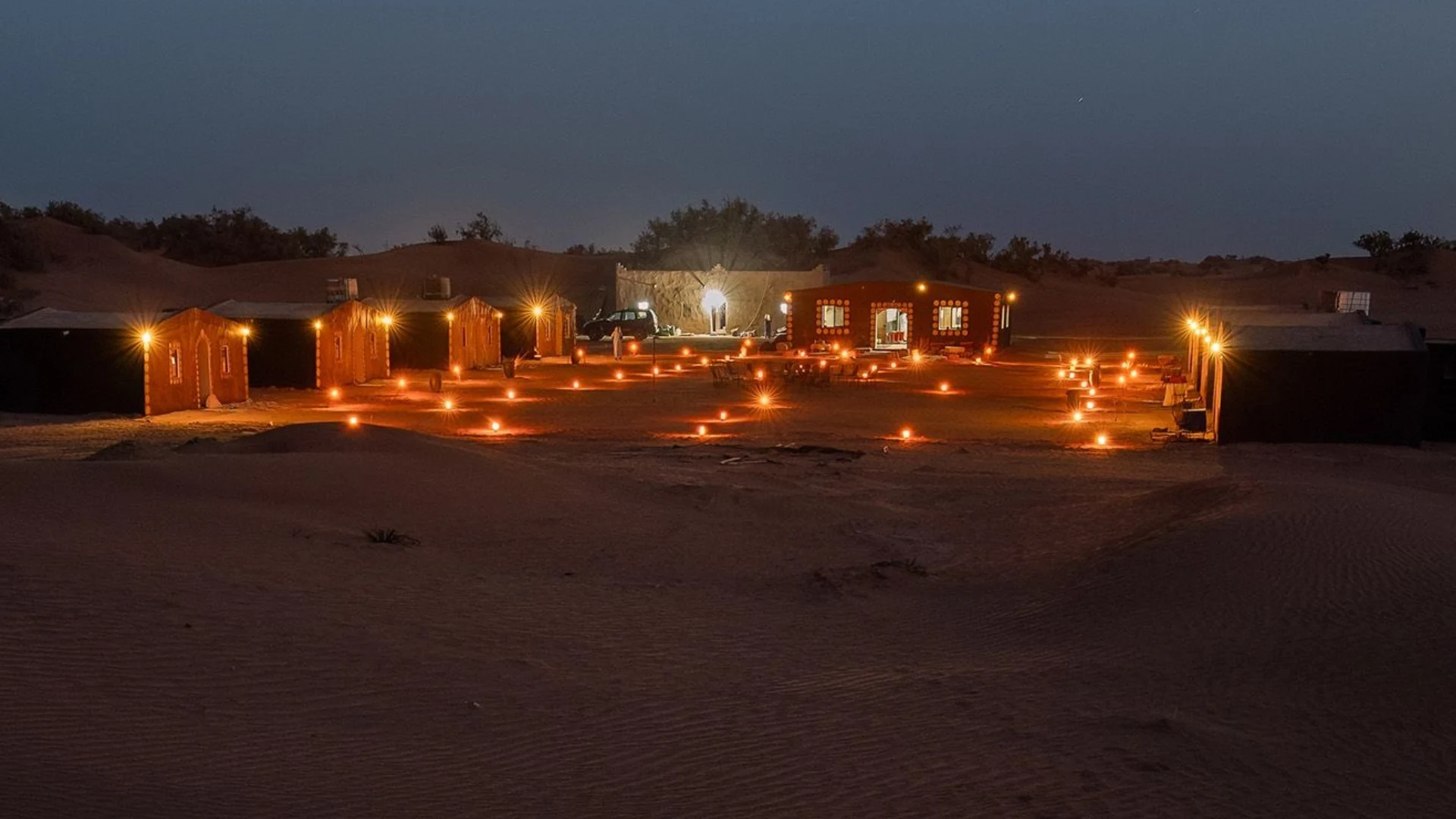
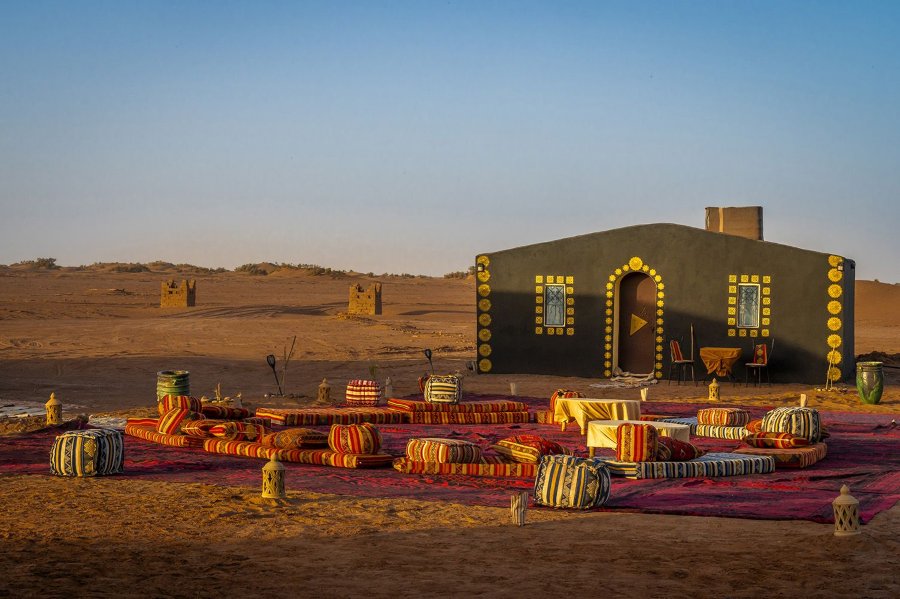
- Camp comfort level. A standard nomad camp overnight starts around €50; luxury glamping camps in the same dunes charge €150–300 per person per night. Same stars, very different bill.
- Group vs private. Private departures typically cost 30–50% more per person than shared group tours, with full flexibility on pace and route in return.
- Who’s actually selling it. This one deserves its own section.
The Middleman Effect: Why Booking Direct Costs Less
Here’s the part of the pricing picture most travelers never see. The majority of desert tours sold online — through international booking platforms, hotel concierges, and Marrakech agencies — aren’t operated by the seller at all. They’re operated by local camps and guides in places like M’Hamid, with the seller adding a commission on top. It’s common to see the same 3-day M’Hamid-to-Chigaga itinerary listed on international platforms for $400–500 per person — two to three times the direct-booking price for an identical trek, identical camp, identical guides.
That margin doesn’t buy you a better tour. It buys the platform’s advertising. When you book directly with the camp — by WhatsApp or through the camp’s own site — the price is lower and more of what you pay stays with the families actually running the trek. It’s the rare travel decision where the cheaper option is also the more ethical one.
Budget, Standard, and Private: The Three Price Tiers
Budget (from ~€45–50/day): shared group departures, standard nomad camps with shared facilities, set itineraries. Everything essential, nothing decorative — and for many travelers, the most authentic version of the desert.
Standard (from ~€60–90/day): smaller groups or semi-private treks, better-equipped camps, more flexible timing. The sweet spot for most visitors, and where our own tours sit.
Private / luxury (€150–300+/day): private vehicle and guide, luxury camps with en-suite tents and hot showers in the dunes. Spectacular, but understand you’re paying primarily for comfort infrastructure, not a different desert.
Tipping: What’s Normal in the Desert
Tipping isn’t obligatory in Morocco, but it’s customary and genuinely appreciated for good service. A reasonable guideline on a desert trek is roughly €5–10 per person per day, given at the end of the trip and shared among the guide, camel handlers, and camp cooks. For a group on a 3-day trek, that lands around €15–30 per traveler — worth budgeting alongside the tour price itself so it doesn’t catch you off guard on the last morning.
Is a Longer Trek Worth the Extra Cost?
On a per-day basis, longer treks are almost always better value — a 5-day trek costs far less per day than a 1-day excursion, because your fixed costs (getting to M’Hamid, camp setup) spread across more days. More importantly, the deep-desert experience most people picture — total silence, no other groups, the biggest dunes — only really begins on treks of three days or more, which is what it takes to move beyond the day-trip radius around town.
If you’re weighing trip lengths against your dates, two of our guides pair naturally with this one: the best time to visit the Sahara from M’Hamid (season affects comfort far more than budget does) and what camel trekking is really like day to day.
Frequently Asked Questions
How much does a Sahara desert tour cost per person?
From M’Hamid, expect from around €45 for a one-day tour, €90 for a two-day trek with an overnight camp stay, and roughly €60–90 per person per day for standard multi-day treks with meals, camels, and guiding included. Luxury camps run €150–300 per night, and private tours cost 30–50% more than group departures.
Why are Marrakech desert tours so cheap?
The rock-bottom “3-day Marrakech desert tour” offers (sometimes under €100) typically spend most of the time on a bus, use large groups, overnight at crowded camps near the road, and recover their margin through pressured stops at shops and restaurants along the way. The desert portion is often just one short camel ride. Cheap isn’t the same as good value.
Is it cheaper to book a desert tour in advance or on arrival?
Prices are broadly similar, but booking direct with a camp in advance gets you the same local price with none of the arrival-day uncertainty — and in peak season (October–November), good camps genuinely sell out.
Do children pay full price on desert tours?
Usually not — discounts for children are standard across the region, commonly around half price for younger kids sharing a tent with parents. Ask when booking, as exact policies vary by camp.
What payment methods do desert camps accept?
Cash (euros or dirhams) remains standard in and beyond M’Hamid, and the last reliable ATMs are in Zagora. Many camps, including ours, can arrange deposits by bank transfer or online payment when booking — but plan to carry cash for tips and extras.
More questions? Our FAQ page covers camp facilities, logistics, and everything in between.
Final Thoughts: Budget for the Trip, Not Just the Tour
The real Sahara desert tour cost is friendlier than the mystery-pricing culture of this industry suggests: a genuine multi-day desert trek from M’Hamid, with everything included, costs less per day than a mid-range Marrakech hotel room. Add your transport to M’Hamid and a modest tipping budget, and you have the honest, complete number — no “contact us” button required.
Want an exact quote for your dates, group size, and trek length? Contact us or message us directly on WhatsApp at +212 621 440 716 — we’ll send you a clear, all-inclusive price within the day.
Continue Reading
- How to Reach M’Hamid El Ghizlane from Marrakech, Fez & Ouarzazate
- Best Time to Visit the Sahara Desert from M’Hamid
- Erg Chigaga vs Erg Chebbi: Which Sahara Dunes Should You Visit?