
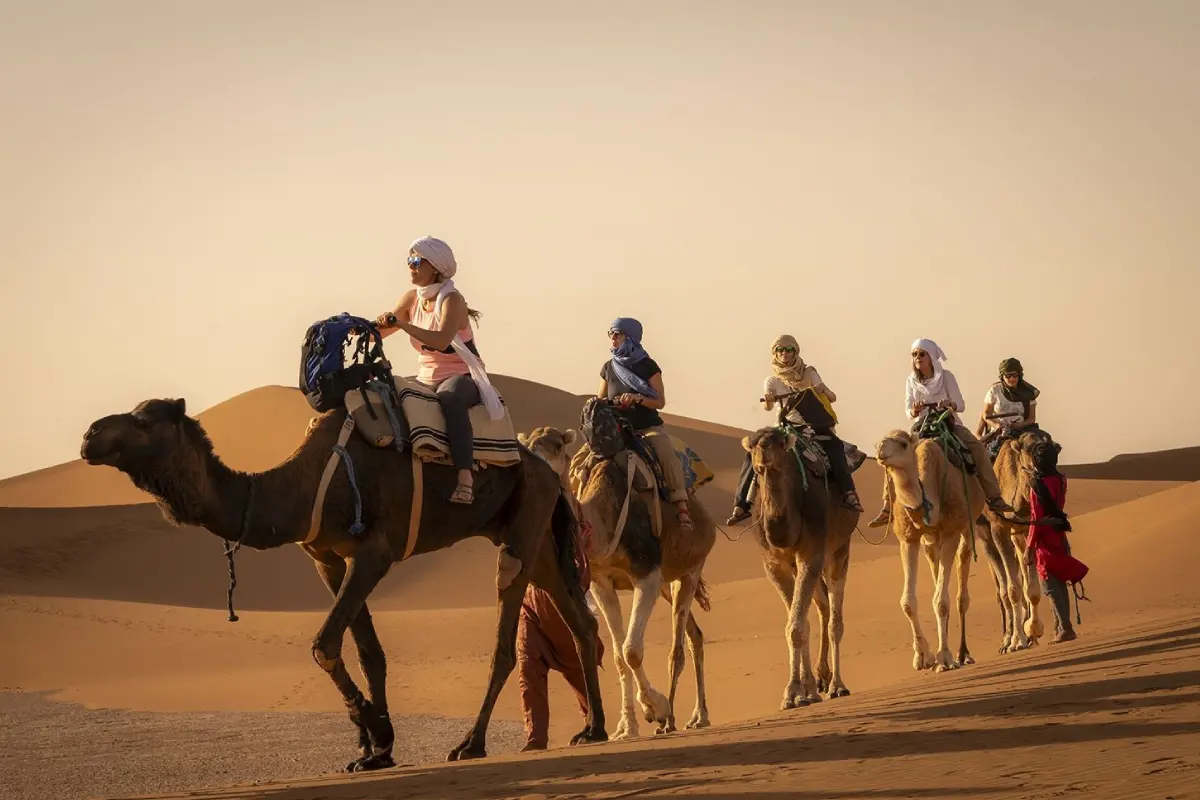
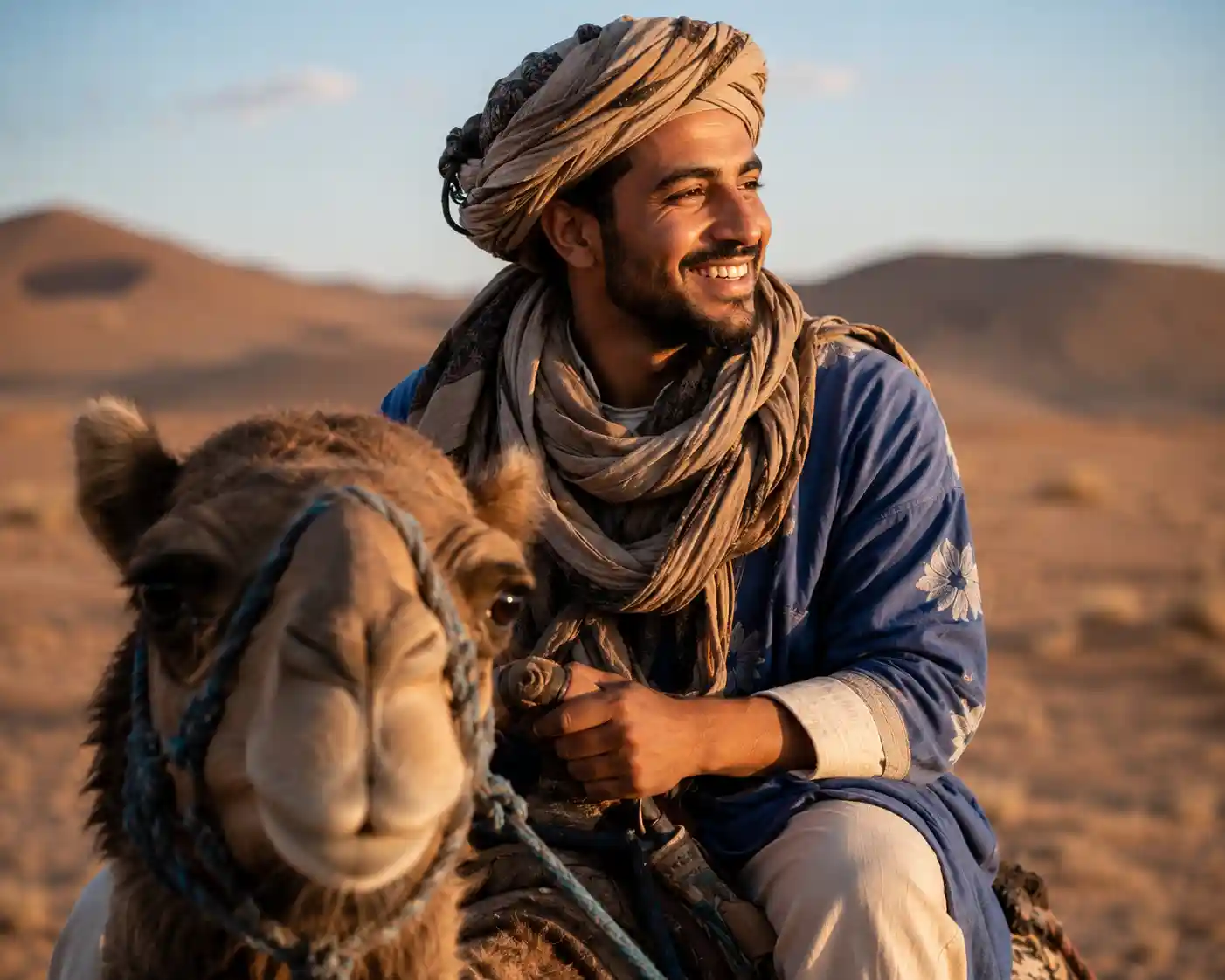
Camel trekking in the Sahara is the image most people have in their heads before they’ve ever set foot in the desert — a slow, swaying line of camels crossing golden dunes under an enormous sky. It’s a genuinely special experience, but it’s also one that comes with a few surprises for first-timers: camel riding is more physical than it looks, the pace is much slower than you’d expect, and a “camel trek” often involves just as much walking as riding.
This guide covers what a camel trek near M’Hamid is actually like, day to day, so you know exactly what you’re signing up for before you book.
Table of Contents
- What a Camel Trek Actually Involves
- Meeting Your Camel: The First Five Minutes
- How Long Does a Camel Trek Actually Last?
- Walking vs. Riding: Which Is Better?
- Is Camel Trekking in the Sahara Physically Difficult?
- A Typical Day on a Multi-Day Camel Trek
- Are the Camels Treated Well?
- What to Bring on a Camel Trek
- Frequently Asked Questions
What a Camel Trek Actually Involves
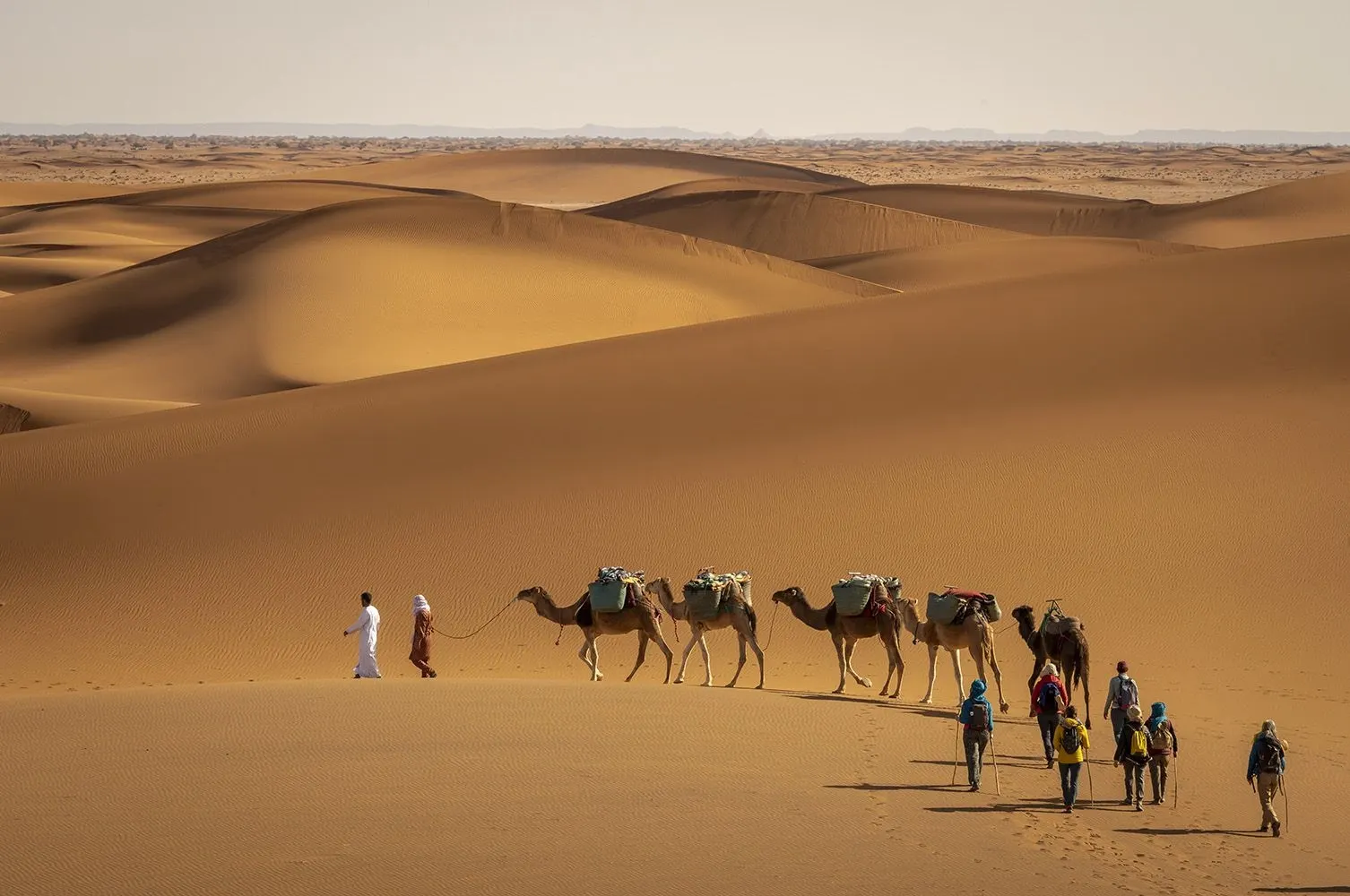
A common misconception is that a “camel trek” means riding a camel for the entire journey, start to finish. In reality, most Sahara desert trekking itineraries mix riding with walking, both for practical reasons and for comfort. Camels — technically dromedaries, the one-humped camels native to North Africa — are typically used for carrying the heavier gear and for sections of riding at a comfortable pace, while guests often walk alongside for parts of the journey — partly to stay comfortable over longer distances, and partly because walking through the dunes is, for many travelers, half the appeal.
Your guide and camel handlers (often local Berber nomads with generations of desert experience) lead the caravan, set the pace, and decide when riding or walking makes more sense based on terrain, heat, and group energy.
Meeting Your Camel: The First Five Minutes
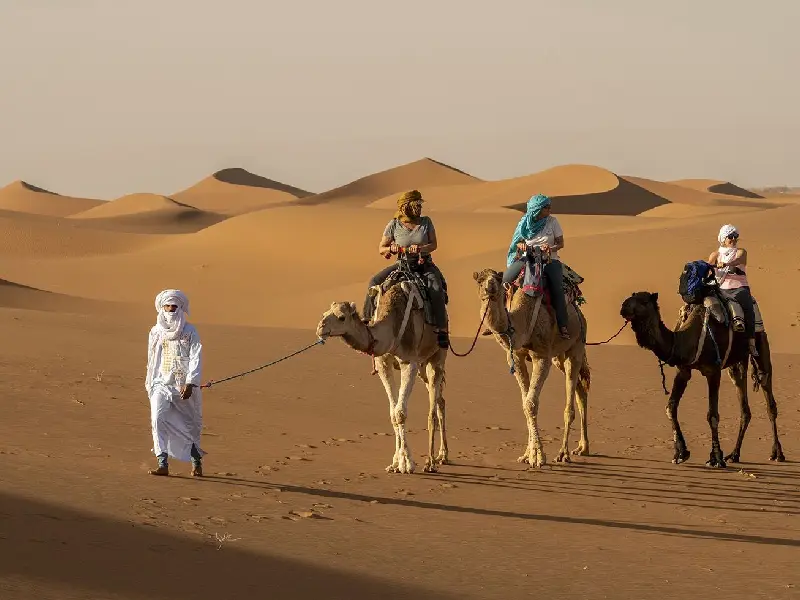
The mounting moment surprises almost everyone, so here’s exactly how it goes. Your camel will already be sitting (kneeling on folded legs) when you climb into the saddle. Once you’re seated, the camel stands up in two distinct, jolting movements — back legs first, which pitches you sharply forward, then front legs, which rocks you back. Hold the saddle pommel firmly with both hands, lean back slightly as the camel rises, and it’s over in three seconds. The same happens in reverse when dismounting.
The other thing to know: camels are vocal. Groaning, grumbling, and dramatic bellowing — especially while being loaded or saddled — is completely normal camel conversation, not a sign of distress or bad temper. First-timers often worry they’ve been assigned an angry camel; after an hour on the trail, most travelers are fully charmed by their grumpy-sounding companion.
How Long Does a Camel Trek Actually Last?
This depends entirely on your itinerary, and it’s one of the most important questions to answer before booking.
- A short excursion (an hour or two) is often included as part of a one-day desert tour — enough time to experience riding a camel and watching sunset or sunrise over the dunes, without a multi-day commitment.
- A half-day to full-day trek typically covers a longer stretch of dunes, often timed around sunrise or sunset departures to avoid the hottest hours, and usually ends with an overnight stay at a desert camp.
- A multi-day trek (two to five days) involves multiple riding and walking sections each day, moving deeper into the desert, with overnight camps along the route rather than a single fixed camp.
If you’re deciding between trip lengths, our tours page lists every available option, from a 1-day tour to Erg Zahar through to a full 5-day trek to Erg Zahar and the Draa Valley, so you can match the length of the trek to how much riding and walking you’re genuinely comfortable with.
Walking vs. Riding: Which Is Better?
Neither is objectively “better” — they simply serve different purposes and suit different travelers.
Riding a camel is the classic Sahara experience: a slow, rhythmic sway as the camel walks, a vantage point above the dunes, and noticeably less physical effort than walking through soft sand. That said, camel riding uses muscles most people don’t use regularly — expect some soreness, particularly in the inner thighs and lower back, especially on your first longer ride.
Walking through the dunes gives you a closer, more physical connection to the landscape — the resistance of soft sand underfoot, the silence, the direct experience of the terrain rather than observing it from a camel’s back. It’s more physically demanding, especially in soft, deep sand, but many travelers find it the more immersive of the two.
Most multi-day treks include a mix of both, letting you experience the classic camel-riding moments (especially at sunrise and sunset, when the light and photo opportunities are best) while also giving your body a break from riding during flatter or shorter stretches.
Is Camel Trekking in the Sahara Physically Difficult?
Camel trekking in the Sahara is accessible to most reasonably active travelers, including many families and older adults, but it’s worth being honest about the physical realities:
- Riding requires balance and some core engagement, particularly when the camel stands up or sits down (that jolting motion described above) and during uneven terrain.
- Walking in soft sand is more tiring than walking on flat, firm ground, and multi-day treks involve sustained walking across changing dune terrain.
- Heat and sun exposure add to the physical demand, which is why timing (early morning and late afternoon departures) and proper hydration matter as much as fitness level.
If you’re unsure whether a particular trek length suits your fitness level, it’s worth discussing this directly when booking — treks can often be adapted with more riding and less walking for travelers who prefer a lower-intensity pace.
A Typical Day on a Multi-Day Camel Trek
While every itinerary varies, a typical day often follows a rhythm shaped by the desert’s own daily temperature swing:
- Early morning departure, often just after sunrise, when temperatures are coolest and the light is best for photography.
- A riding and walking combination through the morning, covering the day’s main distance before the midday heat builds.
- A rest period around midday, often in the shade of tents or natural shelter, mirroring the traditional rhythm of desert nomads.
- A late afternoon or early evening push toward the next camp, timed to arrive before or around sunset.
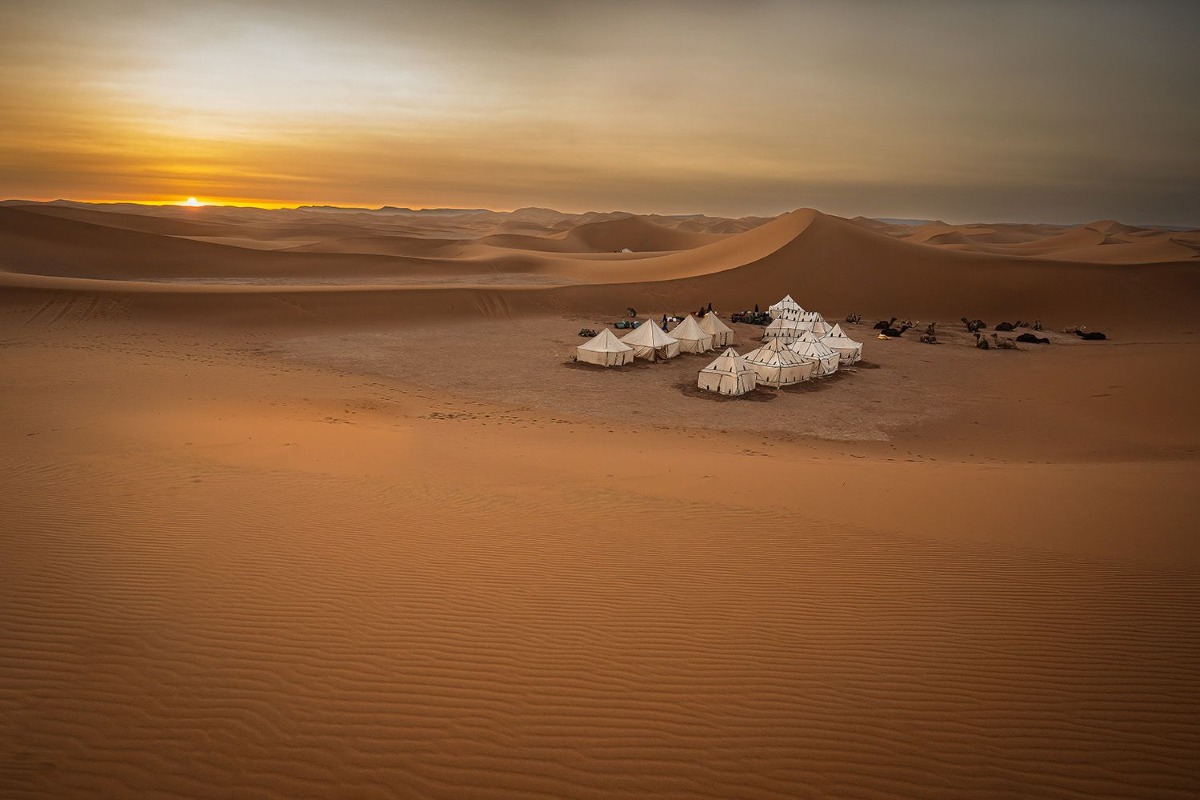
- Camp setup, dinner, and an evening around the fire, often with traditional music, before settling in for the night at the nomad camp.
Are the Camels Treated Well?
It’s a question more travelers are asking, and it deserves a straight answer. For the nomadic families of the M’Hamid region, camels aren’t tourist props — they’re working partners, and often a family’s single most valuable possession, cared for accordingly. A healthy, well-rested camel is quite literally the foundation of a camel handler’s livelihood.
In practice, that means camels carry balanced, weight-appropriate loads, rest through the hottest midday hours alongside the group, and graze and water at every camp. Riding is rotated with walking sections partly for your comfort — and partly for theirs. If animal welfare matters to you when choosing an operator (and it should), ask how many hours per day the camels work and whether loads are shared across the caravan. Any good camp will answer without hesitation.
What to Bring on a Camel Trek
A comfortable camel trek depends heavily on the right gear and clothing — loose, breathable layers for riding, sturdy shoes for the walking sections, and proper sun and cold-weather protection depending on the season. If you haven’t finalized your packing list yet, our complete Sahara Desert packing list is worth reading in detail before your trip so you’re not caught out by the desert’s dramatic day-to-night temperature swing.
Frequently Asked Questions
What is camel trekking in the Sahara really like?
Slower and more physical than most people expect — a mix of riding and walking through the dunes at a nomad’s pace, structured around sunrise departures, midday rest, and evenings at a desert camp. Expect some soreness after your first longer ride, and expect the sunsets to more than make up for it.
How long is a typical Sahara camel trek?
It varies widely — from a one- to two-hour excursion as part of a day tour, up to multi-day treks of two to five days covering longer distances deeper into the dunes.
Is camel trekking uncomfortable?
Some soreness, particularly in the legs and lower back, is common after a longer ride, especially for first-timers. Shorter rides combined with walking sections generally minimize this.
Can beginners do a multi-day camel trek?
Yes — no prior riding experience is required. Guides manage the pace, and treks typically mix riding with walking, making them accessible to most reasonably fit travelers.
Is walking or riding better for photos?
Riding generally offers better vantage points and the classic “caravan silhouette” shot, especially at sunrise and sunset, while walking allows for close-up shots of dune textures and footprints.
What happens if I can’t continue riding partway through?
Guides are experienced in adjusting pace and swapping between riding and walking based on how guests are feeling, so it’s entirely possible to shift the balance during the trek itself.
For more trip-specific questions, visit our FAQ page.
Final Thoughts
Camel trekking in the Sahara is every bit as memorable as its reputation suggests, but going in with realistic expectations — about pace, physical demand, and the mix of riding and walking — makes the experience even better. Whether you choose a short sunset ride or a multi-day trek deep into the dunes, arriving at camp as the sky turns gold, with a camel caravan behind you, is a moment that lives up to the postcard.
Continue Reading
- The Complete Sahara Desert Packing List
- Erg Chigaga vs Erg Chebbi: Which Sahara Dunes Should You Visit?
- Nomadic Culture & Berber Traditions of the M’Hamid Sahara
Ready to plan your camel trek? Contact us or message us directly on WhatsApp at +212 621 440 716 — we’ll help you choose the right trek length and pace for your trip.